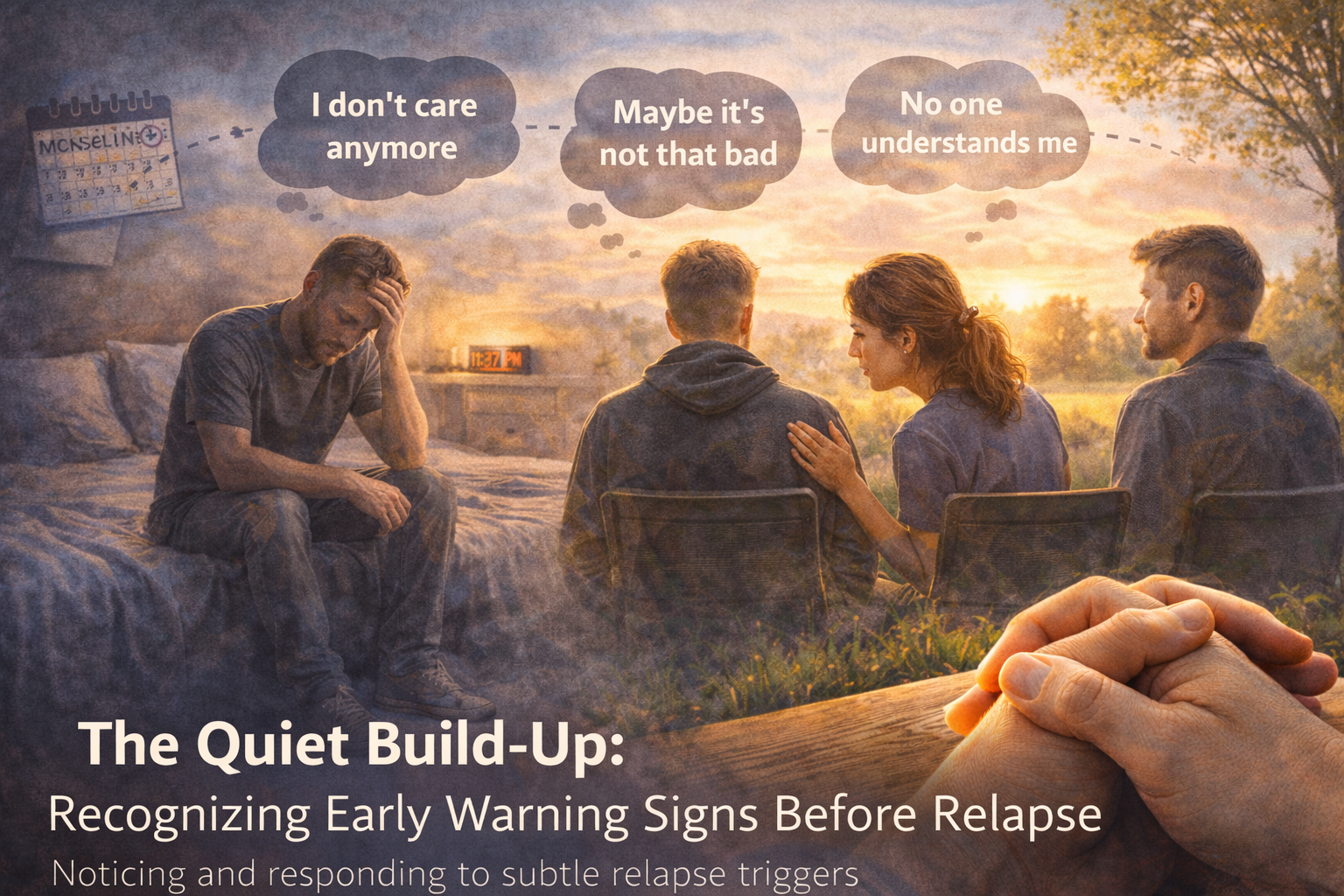
When people think about relapse, they often imagine a sudden decision to return to substance use. In reality, relapse is rarely sudden. More often, it develops gradually through small emotional and behavioral shifts that occur long before substance use happens.
Learning to recognize these early warning signs is one of the most effective ways to protect long-term recovery.
At Creative Counseling Solutions, relapse prevention is not about fear or punishment—it is about awareness. The earlier individuals notice subtle changes in thoughts, emotions, and routines, the easier it is to make adjustments and stay grounded in recovery.
Relapse Begins Long Before Substance Use
Substance use is usually the final stage of a longer process. Before that point, individuals may experience emotional or mental shifts that weaken their recovery foundation.
These changes may include:
- Increased stress or emotional overwhelm
The Role of Emotional Awareness
Recovery requires learning to recognize emotional changes early. Many people used substances in the past to escape uncomfortable feelings, which can make emotional awareness challenging at first.
Common emotional warning signs may include:
- Feeling disconnected or numb
Developing emotional awareness allows people to respond to these feelings rather than react impulsively.
Small Changes in Routine Can Be Important Signals
Structure plays a key role in maintaining stability. When routines begin to slip, it can be an early sign that stress or emotional fatigue is building.
Examples might include:
- Missing counseling appointments
Why Self-Compassion Matters in Relapse Prevention
One of the biggest barriers to addressing warning signs is shame. When people notice old thoughts or behaviors returning, they may feel embarrassed or discouraged.
However, recovery is not about perfection.
Experiencing difficult thoughts, stress, or emotional setbacks is a normal part of the recovery process. What matters most is how individuals respond when these signs appear.
Approaching these moments with curiosity and self-compassion makes it easier to seek support and reconnect with recovery tools.
Staying Connected to Support
One of the most effective ways to prevent relapse is maintaining connection with supportive people and professional resources.
This may include:
- Continuing outpatient counseling
Recovery Is a Process of Awareness
Relapse prevention is not about avoiding stress or eliminating difficult emotions. Instead, it is about developing the awareness to notice changes early and respond intentionally.
By recognizing early warning signs, individuals can protect the progress they have made and continue moving forward with confidence.
At Creative Counseling Solutions, we work with individuals to strengthen self-awareness, reinforce coping strategies, and support long-term recovery stability.
If you or a loved one are noticing increased stress, emotional changes, or shifts in routine, counseling can provide support before challenges become overwhelming.