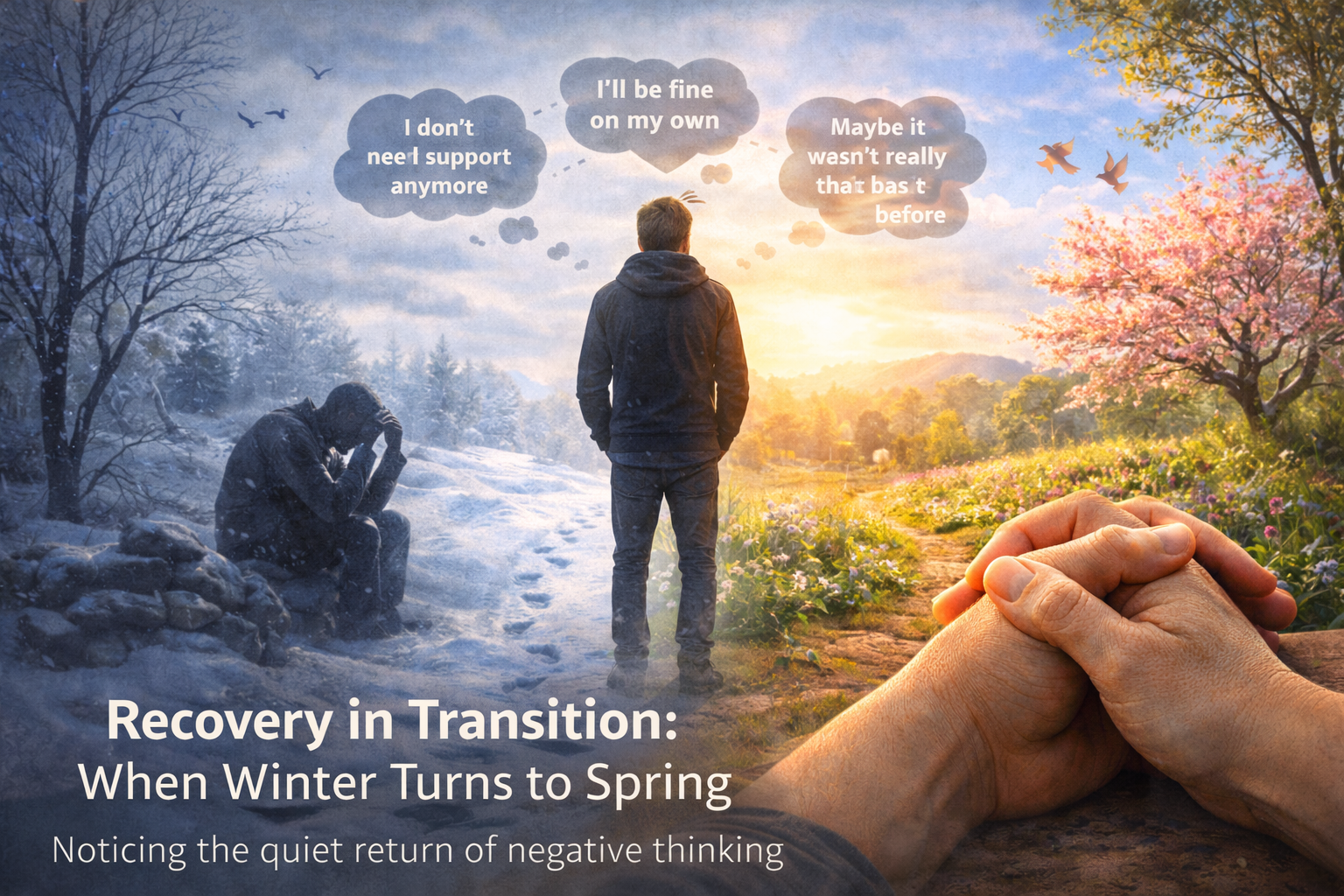
Recovery often unfolds in seasons. There are periods of intense effort, uncertainty, and emotional heaviness—much like winter. And then, gradually, things begin to shift. Energy returns. Hope feels more accessible. The days feel lighter.
Spring in recovery can be a powerful and encouraging time. But it can also be a moment when vigilance matters most.
As individuals move further from an acute substance use treatment episode, it’s common to feel more stable while simultaneously becoming less aware of subtle warning signs. Understanding this seasonal transition can be an important part of relapse prevention.
The “Winter” Phase of Recovery
Early recovery often feels like winter—bare, quiet, and demanding. During this phase, individuals are usually highly aware of risk:
- Cravings are more noticeable
- Emotional regulation requires conscious effort
- Structure and support feel essential
- Negative thoughts are recognized quickly
Because the work feels heavy, awareness is often high. People are watching themselves closely, using tools deliberately, and leaning on support systems.
This intensity can be exhausting—but it is also protective.
When Things Start to Feel Easier
As recovery progresses, many people enter a “spring” phase. Life begins to open back up. Confidence grows. The urgency of early recovery softens.
This can look like:
- Improved mood and energy
- Increased independence
- Reduced cravings or urges
- A sense of “I’ve got this now”
These changes are signs of progress—not problems. However, this is also when subtle risks can re-enter quietly.
The Quiet Return of Negative Thinking
Relapse rarely begins with substance use. It often starts with thoughts.
During transitional phases, individuals may notice:
- Increased self-criticism
- Minimizing past consequences
- Romanticizing previous behaviors
- Emotional numbness or avoidance
- Thoughts like “I don’t need support as much anymore”
These thoughts don’t usually arrive loudly. They show up quietly, disguised as confidence, fatigue, or frustration. Without awareness, they can slowly weaken protective habits.
Relapse prevention is less about fear and more about noticing early shifts.
Spring Requires Awareness, Not Alarm
Spring doesn’t mean danger—it means adjustment.
As recovery stabilizes, it’s important to shift from crisis-level vigilance to intentional awareness:
- Checking in with thoughts, not just behaviors
- Staying connected even when things feel “fine”
- Maintaining routines that support emotional regulation
- Recognizing stress before it accumulates
Counseling during this phase often focuses on noticing patterns rather than correcting problems. The goal is to stay curious, not critical.
Staying Grounded as Growth Continues
Healthy recovery adapts with the seasons. Just as spring requires different preparation than winter, later recovery benefits from different tools.
Helpful practices include:
- Periodic counseling check-ins
- Reflective journaling or mindfulness
- Honest conversations with trusted supports
- Reviewing personal relapse warning signs
- Re-engaging coping skills before stress escalates
Staying grounded doesn’t mean going backward—it means continuing to respond intentionally as life expands.
Recovery Is Cyclical, Not Linear
Every season of recovery offers something valuable. Winter builds strength and discipline. Spring offers growth and renewal. Both require awareness in different ways.
At Creative Counseling Solutions, aka NewDay Counseling, we support individuals through all phases of recovery—not just during moments of crisis, but during transitions where growth is happening quietly.
If you or a loved one are noticing old thought patterns resurfacing, increased stress, or uncertainty during a period of stability, counseling can help reinforce awareness and support long-term recovery.
Recovery doesn’t stop when things improve—it evolves.
Resources
NewDay Counseling
Outpatient Services
Long-term Recovery Residence
Leave a Reply