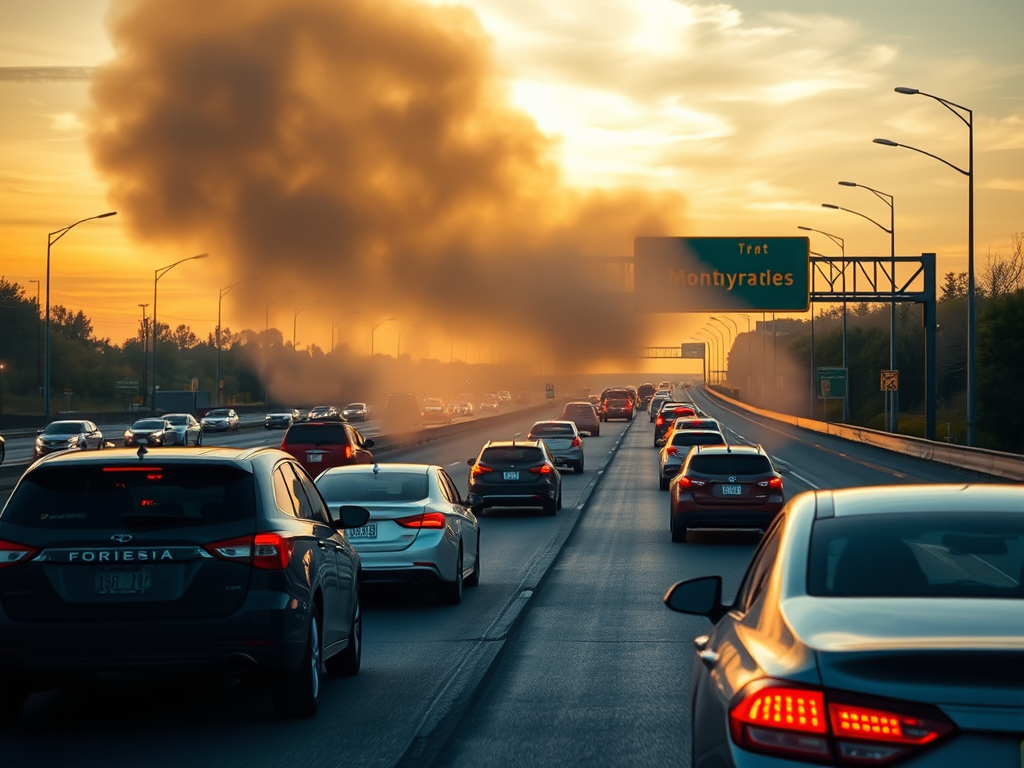
That “Skunky” Morning Commute: The Hidden Crisis on Our Highways
There’s nothing quite like cruising down a busy interstate before sunrise, coffee in hand, mentally preparing for the day ahead—when suddenly that unmistakable skunky smell hits. And no, it’s not wildlife. We don’t have skunks where I live. We all know exactly what it is.
Someone is smoking marijuana while driving.
At 7 a.m.
On a packed interstate.
Sarcasm aside, it would almost be funny if it weren’t so dangerous.
For years, the conversation around impaired driving has focused almost exclusively on alcohol. But the data emerging from the last decade paints a very different—and deeply concerning—picture about cannabis use behind the wheel.
A major 2025 study by the American College of Surgeons analyzed coroner records from 2019 to 2024 and found that 41.9% of drivers who died in motor vehicle collisions tested positive for active THC. Not trace amounts. Not leftover metabolites. Active THC. This isn’t including people that were killed by a impaired driver that was high on cannabis.
Even more alarming:
- The average THC level in these fatal cases was 30.7 ng/mL, far above the 2–5 ng/mL threshold many states use to indicate impairment.
- In some states, like Washington, earlier studies showed the percentage of THC-positive drivers in fatal crashes doubled after legalization. I don’t know about you, but I have a different opinion on the legalization of Marijuana now.
So while the laws changed, the behavior didn’t—and the consequences are showing up in morgues, not headlines.
The research on cannabis-impaired driving reveals a pattern of risky habits that should concern anyone who shares the road:
- Crash risk increases by 20% to 35% after cannabis use.
- 53% of marijuana users in one AAA study admitted they consumed the drug within an hour of driving.
- A 2019 survey estimated 14.8 million drivers had driven within an hour of using marijuana.
- Edibles—often perceived as “safer”—can impair driving for up to eight hours.
And then there’s the perception problem:
Nearly half of regular users believe it’s “safe” or “somewhat safe” to drive while high.
THC detection is tricky. It can linger in the bloodstream long after impairment fades. But the high levels found in recent fatal crash studies strongly suggest recent use, not leftover metabolites from last weekend.
Another major factor:
Alcohol and cannabis together create a dangerous multiplier effect.
Many fatal crashes involving THC also involve alcohol, and the combination significantly worsens impairment.
When you’re driving to work and smell that skunky cloud drifting from the car ahead, it’s not just unpleasant—it’s a reminder of a growing public safety blind spot.
Cannabis-impaired driving isn’t a fringe issue. It’s not a political debate. It’s not a moral argument.
It’s a road safety crisis.
And unlike alcohol, where we have decades of public education, clear legal limits, and widespread cultural awareness, cannabis-impaired driving is still treated like a gray area. There’s no national THC limit, no standardized roadside test, and no unified public message.
Meanwhile, the fatalities keep climbing.
The next time that “skunky” smell hits your car vents on the interstate, remember: it’s not harmless. It’s not quirky. It’s not “just weed.”
It’s a sign that someone is operating a two-ton vehicle while impaired—on the same road where you, your family, and thousands of others are simply trying to get to work safely.