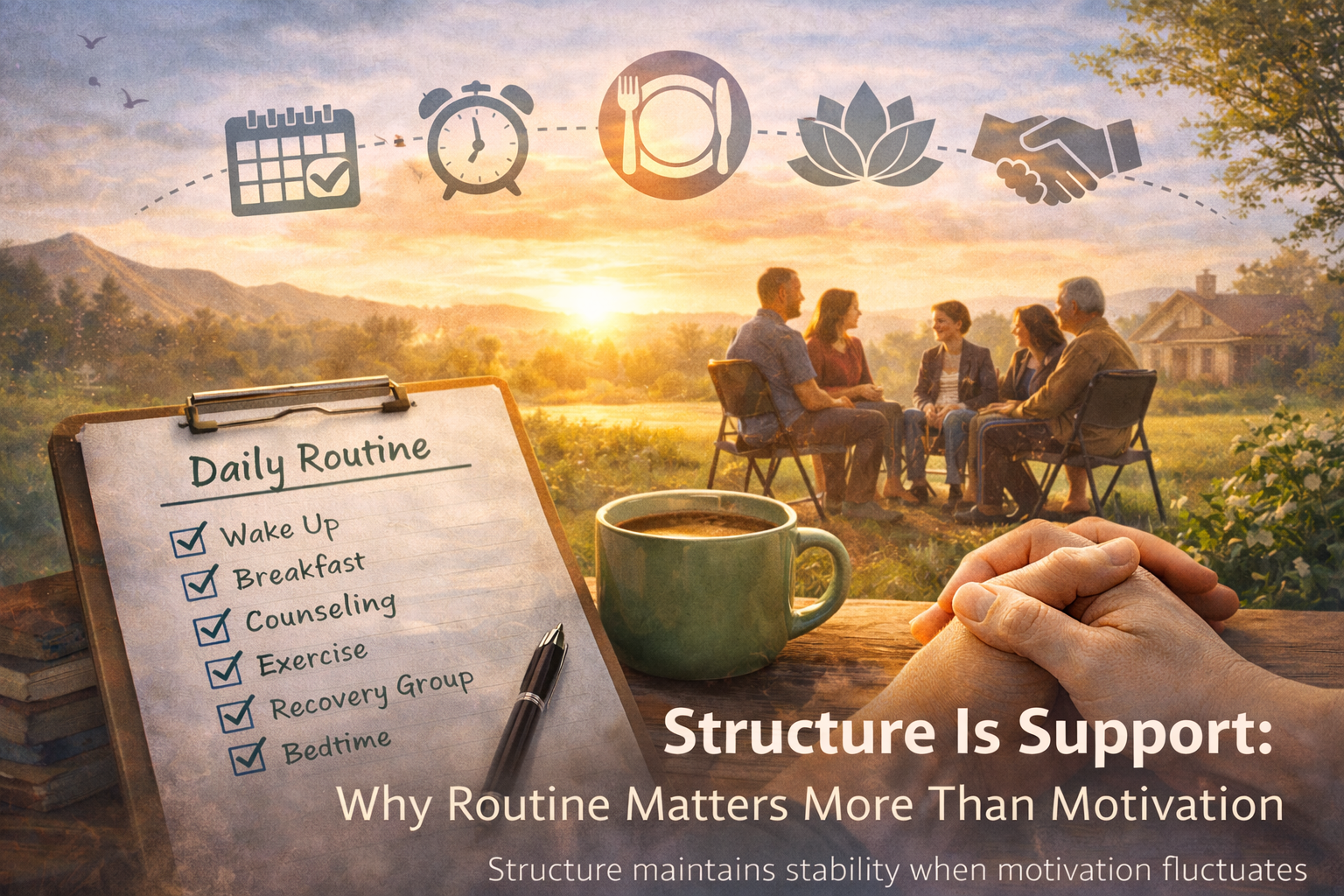
Motivation is often strongest at the beginning of recovery. The consequences are fresh, the goals are clear, and the urgency to change feels immediate. Over time, however, motivation naturally fluctuates. Life becomes busier. Emotions level out. The sense of crisis fades.
This is where many people feel confused or discouraged—believing that reduced motivation means something is wrong.
In reality, long-term recovery is sustained less by motivation and more by structure.
At Creative Counseling Solutions, we often emphasize that routine is not restriction—it is support.
Why Motivation Alone Isn’t Enough
Motivation is an emotional state, and emotional states are temporary. Even individuals deeply committed to recovery will experience:
- Low-energy days
- Emotional fatigue
- Stress or overwhelm
- Moments of self-doubt
When recovery relies solely on motivation, these moments can feel destabilizing. Structure provides stability when feelings fluctuate.
Rather than asking, “Do I feel like doing this today?”, structure allows recovery to continue even when motivation is low.
Structure Regulates the Nervous System
Routine does more than organize time—it supports emotional regulation.
Consistent daily patterns help:
- Reduce decision fatigue
- Lower stress and anxiety
- Improve sleep and mood stability
- Increase predictability and safety
Substance use often disrupts the nervous system. Recovery restores balance gradually, and structure plays a key role in that process. When the body knows what to expect, it becomes easier to respond thoughtfully rather than react impulsively.
What Happens When Structure Drops
As life improves, it’s common for structure to loosen unintentionally. Appointments may be skipped, routines drift, and coping skills are used less consistently.
This can lead to:
- Increased emotional reactivity
- Disrupted sleep or eating patterns
- Heightened stress
- Return of old thought patterns
These shifts don’t indicate failure—they signal a need to re-anchor recovery supports.
Routine acts as a protective buffer, often preventing relapse before cravings or urges become intense.
What Healthy Structure Actually Looks Like
Structure in recovery does not mean rigid schedules or perfection. Healthy structure is flexible, realistic, and supportive.
Examples include:
- Regular counseling or check-in appointments
- Consistent wake-up and sleep times
- Planned meals and hydration
- Dedicated time for movement or self-care
- Ongoing connection with supportive people
The goal is not control—it’s consistency.
Structure Creates Freedom, Not Limitation
Many people worry that routine will feel confining. In practice, the opposite is often true. Structure reduces chaos, increases confidence, and creates space for meaningful engagement with life.
When basic needs and supports are reliably met, individuals are better able to:
- Handle stress
- Make thoughtful decisions
- Maintain emotional balance
- Stay connected to recovery values
Routine supports recovery quietly, steadily, and effectively.
Recovery Thrives on Consistency
Long-term recovery is built through repeated, ordinary choices—not constant motivation. Structure helps carry recovery forward when feelings fluctuate or life becomes demanding.
At Creative Counseling Solutions, aka NewDay Counseling, we support individuals in creating routines that fit their lives, values, and goals. Recovery doesn’t require perfection—it requires consistency and support.
If you or a loved one are experiencing changes in motivation or structure, outpatient counseling can help reinforce stability and prevent relapse before challenges escalate.
Resources
NewDay Counseling
Outpatient Services
Long-term Recovery Residence
Leave a Reply