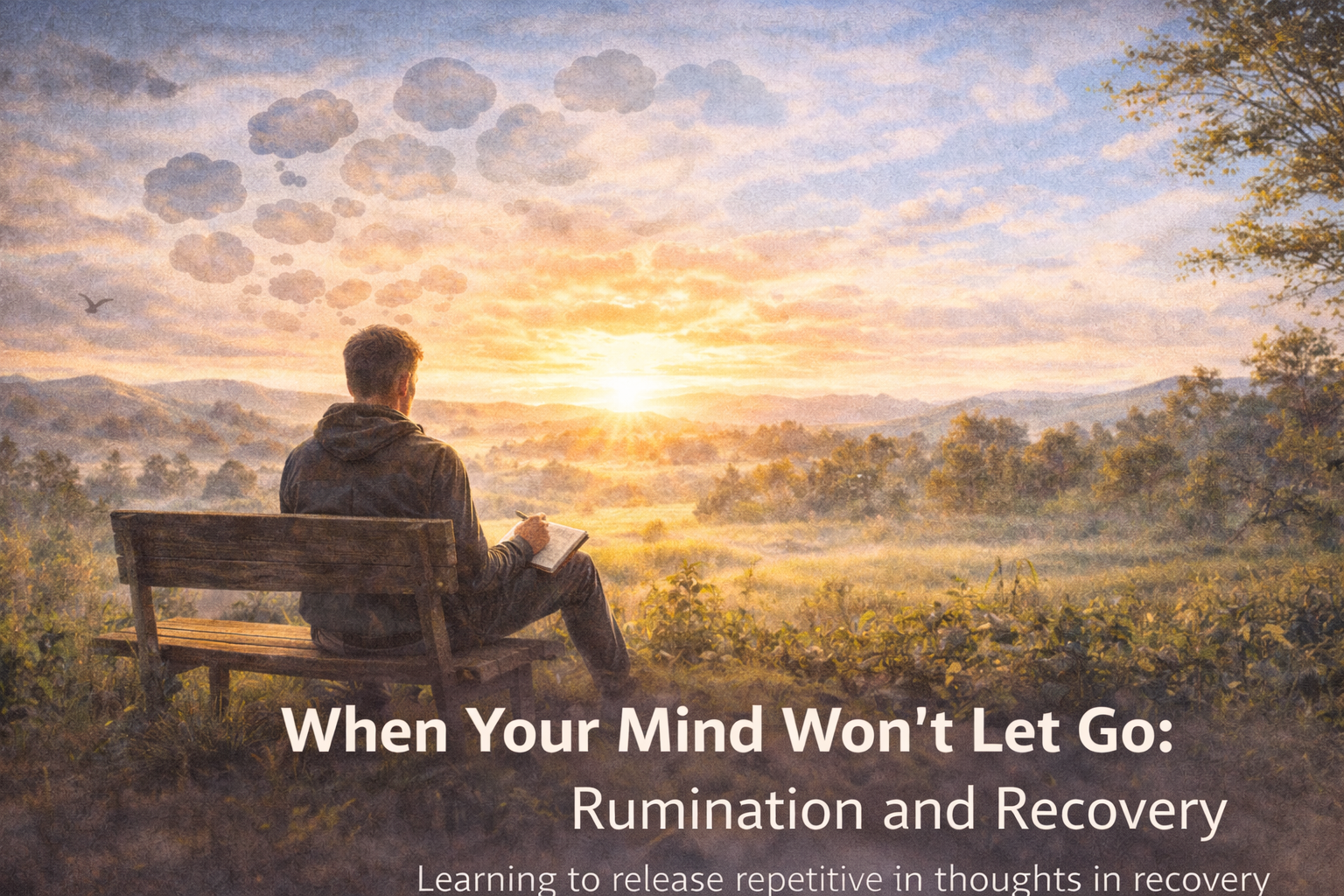
Recovery from substance use often focuses on behaviors—avoiding triggers, building routines, and strengthening support systems. While these strategies are essential, another challenge often appears quietly during recovery: repetitive negative thinking.
This pattern is known as rumination, and it can have a powerful influence on emotional well-being and relapse risk.
At Creative Counseling Solutions, we often help individuals recognize how rumination affects recovery and how learning to interrupt these mental loops can strengthen long-term stability.
What Rumination Looks Like
Rumination occurs when the mind repeatedly returns to the same thoughts, problems, or past events without moving toward resolution.
People experiencing rumination may notice themselves:
- Replaying past mistakes or regrets
- Overanalyzing conversations or conflicts
- Worrying constantly about the future
- Fixating on feelings of guilt or shame
- Feeling mentally “stuck” on the same thoughts
While reflection can be healthy, rumination keeps the brain in a cycle of distress rather than problem-solving.
Why Rumination Is Common in Recovery
Substances often function as a way to escape uncomfortable thoughts or emotions. When substances are removed, those thoughts can return with greater intensity.
Individuals in recovery may find themselves confronting:
- Regret about past behaviors
- Fear about the future
- Self-criticism or shame
- Stress related to rebuilding life responsibilities
Without tools to manage these thoughts, the mind can become trapped in a loop that increases emotional exhaustion and vulnerability.
How Rumination Increases Relapse Risk
Rumination keeps the brain focused on distress. Over time, this can lead to:
- Increased anxiety and depression
- Sleep disturbances
- Reduced motivation
- Emotional overwhelm
When emotional distress builds, the brain may begin searching for ways to quickly relieve that discomfort. In the past, substances may have served that role.
Learning to interrupt rumination helps reduce emotional pressure before it reaches that point.
Interrupting the Mental Loop
Breaking rumination does not mean forcing thoughts away. Instead, it involves gently shifting attention and creating space between thoughts and reactions.
Helpful strategies include:
Movement
Physical activity helps reset the nervous system and interrupt repetitive thinking.
External focus
Engaging in tasks that require attention—work, hobbies, or conversation—can help redirect mental energy.
Mindfulness practices
Mindfulness allows individuals to observe thoughts without becoming trapped in them.
Writing thoughts down
Journaling can help organize thoughts that feel overwhelming when left in the mind.
When Support Makes a Difference
Rumination can feel isolating because the struggle happens internally. Counseling provides a space to examine these thought patterns, challenge self-critical beliefs, and develop practical strategies to shift mental loops.
Recovery is not just about changing behavior—it is also about developing a healthier relationship with one’s thoughts.
Recovery Includes Learning How to Think Differently
Everyone experiences difficult thoughts. Recovery is not about eliminating them, but about developing the awareness and skills to respond differently when they appear.
By recognizing rumination and learning to interrupt mental loops, individuals can protect their emotional stability and continue building a healthier life.
At Creative Counseling Solutions, we support individuals in developing these skills so recovery becomes more sustainable, balanced, and resilient over time.