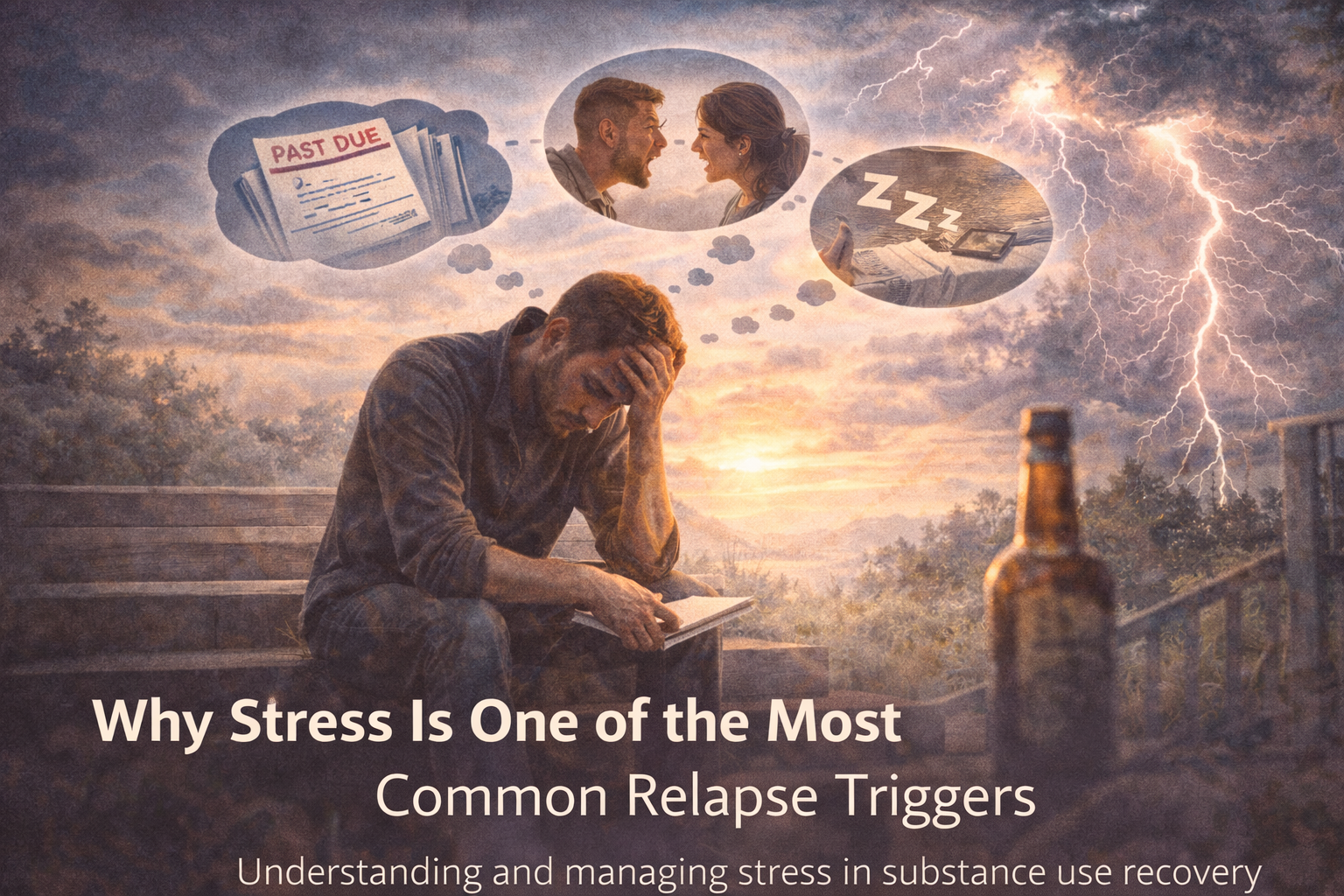
Recovery is often associated with avoiding substances, rebuilding relationships, and creating healthier routines. While these changes are essential, one factor quietly influences nearly every stage of recovery: stress.
Stress is a normal part of life. However, for individuals in recovery from substance use, unmanaged stress can become one of the most significant relapse risks.
Understanding how stress affects the brain and learning practical strategies to manage it can strengthen long-term recovery.
Why Stress Affects Recovery So Strongly
Substances often serve as a temporary escape from stress. When individuals experience overwhelming pressure, the brain may remember how substances previously provided quick relief.
During recovery, stressful situations may trigger:
- Anxiety or agitation
- Emotional exhaustion
- Irritability or frustration
- Sleep disruption
- Difficulty concentrating
These responses are not signs of weakness—they are the brain reacting to pressure.
The goal in recovery is not to eliminate stress entirely, but to develop healthier ways to respond when stress appears.
The Stress–Relapse Connection
Stress affects the brain’s decision-making system. When stress levels rise, the brain shifts toward survival mode, prioritizing immediate relief rather than long-term goals.
This can lead to thoughts such as:
- “I just need a break.”
- “One time wouldn’t matter.”
- “I can deal with this later.”
These thoughts often appear when emotional or physical stress has accumulated over time.
Recognizing stress early allows individuals to respond before it escalates into risky decisions.
Signs Stress May Be Building
Stress does not always appear suddenly. Often it builds gradually through small changes such as:
- Increased irritability
- Sleep difficulties
- Feeling mentally overwhelmed
- Withdrawing from supportive people
- Loss of routine or structure
These signals are important reminders that it may be time to pause, reset, and reconnect with coping strategies.
Healthy Ways to Manage Stress in Recovery
Effective stress management does not require complicated techniques. Often, small consistent habits make the greatest difference.
Helpful strategies include:
Physical movement
Exercise helps regulate stress hormones and improve mood.
Structured routines
Predictable schedules help the brain feel safer and more stable.
Supportive conversations
Talking with trusted friends, family members, or counselors helps reduce emotional pressure.
Mindfulness and relaxation practices
Breathing exercises, meditation, or grounding techniques help calm the nervous system.
Stress Management Is a Recovery Skill
Learning how to respond to stress is an ongoing part of recovery. Over time, individuals can build resilience and confidence in their ability to navigate difficult situations without returning to substance use.
At Creative Counseling Solutions, we work with individuals to develop practical coping strategies that support emotional stability and long-term recovery.
If stress is beginning to feel overwhelming, counseling can help identify effective tools before challenges escalate.