Visit Us Mon-Fri from 9:00 AM to 5:00 PM
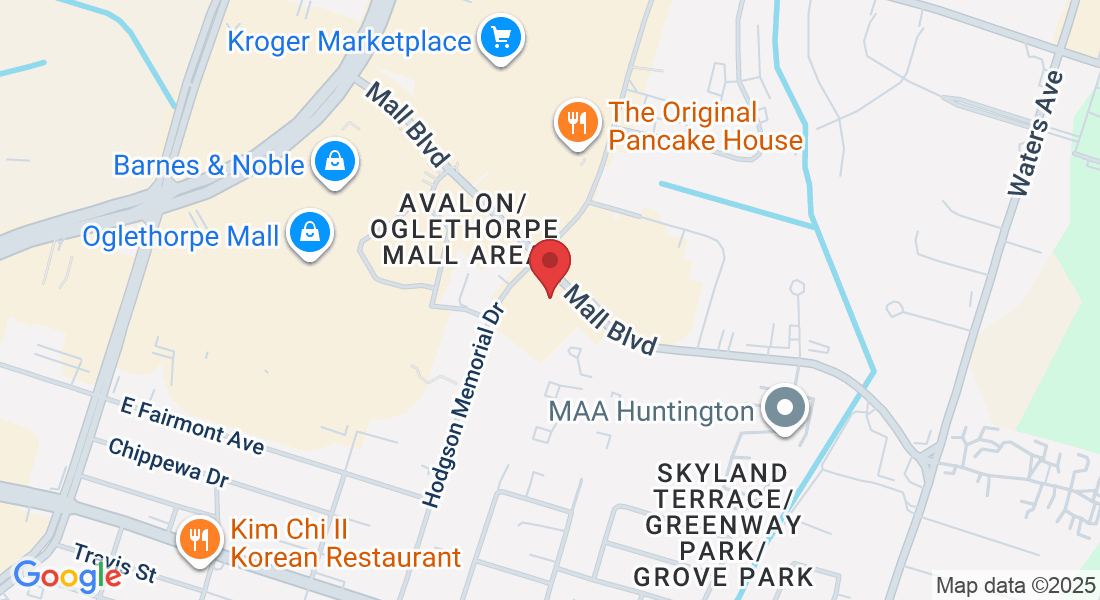
401 Mall Blvd Ste 101-d, Savannah GA 31406
Visit Us Mon-Fri 9:00am - 5:00pm

How Long Does an Intensive Outpatient Program (IOP) Last? Understanding Treatment Duration and Influencing Factors
August 24, 2025, by New Day Counseling
Intensive Outpatient Programs (IOPs) provide a structured therapy framework that supports recovery while allowing participants to maintain daily responsibilities. Many individuals wonder exactly how long an IOP lasts, what influences its length, and what comes next on their journey. In this guide, you’ll discover the typical program timelines, key factors shaping duration, condition-specific variations, aftercare planning, a comparison with Partial Hospitalization Programs (PHPs), options for extending care, and cost-coverage considerations. Whether you’re working with a substance abuse counselor, enrolling in IOP for mental health, or consulting a drug and alcohol counselor, this article maps out everything you need to know.
What Is the Typical Duration of an Intensive Outpatient Program?
An Intensive Outpatient Program (IOP) usually spans several weeks to months, balancing therapeutic depth with real-world integration and enhancing sustained recovery.
How Many Weeks Does a Standard IOP Usually Last?
Standard IOPs commonly run between 8 and 12 weeks, delivering focused group and individual therapy sessions while participants live at home.
- 8 weeks of core skill-building modules on coping and relapse prevention
- 10 weeks when addressing moderate co-occurring disorders alongside substance use
- 12 weeks for more severe cases requiring extended group therapy and family involvement
These timelines ensure adequate exposure to evidence-based treatments and skill mastery before transitioning to a lower level of care.
What Are the Core Components of an IOP?
IOP delivers a higher intensity of care than standard weekly counseling by combining multiple modalities in a concentrated schedule over several weeks. Traditional outpatient therapy typically involves one individual session per week, whereas an IOP schedules three to five sessions per week, each lasting 2–3 hours, to accelerate skill acquisition and peer support.
~ Entity: Therapy Intensity → Attribute: Sessions per Week → Value: 3–5
~ Entity: Session Duration → Attribute: Time → Value: 2–3 hours
~ Entity: Patient Engagement → Attribute: Activities → Value: Group, individual, family interventions
The Importance of 90 Days in Treatment
Research suggests that a minimum of 90 days of consistent therapy is crucial for supporting neurobiological healing and fostering lasting behavioral changes in individuals undergoing treatment for substance use disorders. This extended period allows for the cultivation of effective coping strategies and the strengthening of neural pathways through cognitive-behavioral therapy and relapse prevention techniques.
National Institute on Drug Abuse, Principles of Drug Addiction Treatment: A Research-Based Guide (2018)
This research supports the article's emphasis on the 90-day recommendation for effective treatment outcomes.
How Many Hours per Week Are Required in an IOP?
Most IOPs require at least 9 hours of therapy per week, typically scheduled across multiple sessions.
3 days/week × 3 hours/session = 9 hours minimum
4 days/week × 3–4 hours/session = 12–16 hours for intensive group work
5 days/week × 2–3 hours/session = 10–15 hours when combined with individual counseling
Meeting these weekly hour requirements ensures consistent skill practice and support that enhance resilience and recovery momentum.
What Factors Influence the Length of an IOP?
IOP duration adapts to each person’s unique needs, offering flexibility that supports individualized care and maximizes treatment effectiveness.
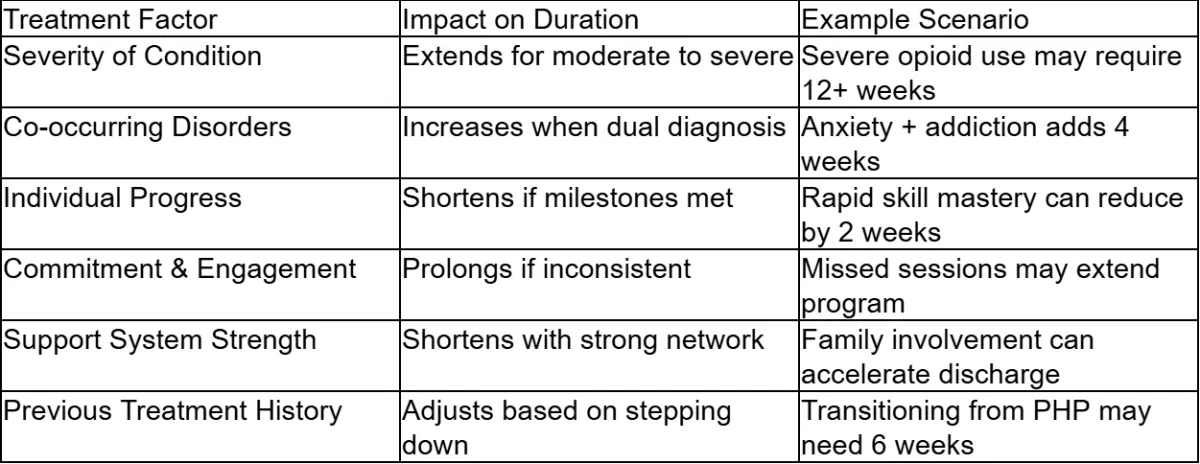
This overview shows how each attribute influences program length, leading into detailed exploration of each factor.
Factors Influencing IOP Duration
The duration of an Intensive Outpatient Program (IOP) is influenced by various factors, including the severity of the condition, the presence of co-occurring disorders, individual progress, commitment to the program, the strength of the support system, and previous treatment history. These factors contribute to the individualized nature of IOPs, ensuring that treatment is tailored to meet each person's unique needs.
Center for Substance Abuse Treatment, Substance Abuse: Clinical Issues in Intensive Outpatient Treatment (2006)
This source provides a framework for understanding the factors that affect the length of time a patient spends in an IOP.
How Does the Severity of Substance Use or Mental Health Disorder Affect Duration?
When a substance use disorder or mental health condition is more severe, IOP length typically increases to allow extra time for stabilization and skill reinforcement. Intensive therapy for moderate to severe depression, for example, may extend from the standard 8–12 weeks up to 16 weeks to fully address symptom relief and relapse prevention.
Effectiveness of Dual Diagnosis Treatment
IOP employs tailored interventions for mental health challenges, combining cognitive and behavioral therapies with skills training to alleviate symptoms.
~ Entity: Major Depressive Disorder → Attribute: Modality → Value: CBT for negative thought patterns
~ Entity: Generalized Anxiety Disorder → Attribute: Strategy → Value: Mindfulness and exposure exercises
~ Entity: Trauma-Related Disorders → Attribute: Technique → Value: EMDR elements within group processing
What Are the Benefits of an Intensive Outpatient Program?
These targeted strategies enhance emotional regulation and resilience, paving the way to dual diagnosis treatment discussion.
How Does IOP Provide Flexibility for Patients?
Active participation and consistent attendance drive faster progress toward discharge criteria. Skipping sessions or minimal group engagement often prolongs IOP duration to ensure coping strategies are fully internalized.
How Does a Patient’s Support System Influence IOP Duration?
Strong family involvement, peer support groups, and sober living environments accelerate skill application and provide accountability, often shortening IOP length by reinforcing treatment concepts between sessions.
Can Previous Treatment History Affect How Long IOP Lasts?
Individuals stepping down from inpatient or PHP settings may require shorter IOP stays—sometimes 6–8 weeks—because they have already completed intensive stabilization phases, allowing the program to focus on maintenance and community reintegration.
How Does IOP Duration Vary by Condition?
While core IOP structures remain consistent, duration customizes to the treated condition, reflecting different recovery trajectories and clinical requirements.
What Is the Typical IOP Length for Substance Use Disorders?
For substance use disorders, programs emphasize a 90-day minimum to support neuroadaptation, craving management, and relapse prevention.
8–12 weeks: Standard IOP for mild to moderate SUD
12–16 weeks: Extended IOP for severe or long-term use
90+ days: Recommended benchmark for sustained abstinence
These timeframes align with addiction medicine guidelines and evidence-based best practices.
How Long Does IOP Last for Mental Health Disorders Like Depression and Anxiety?
IOP for depression, anxiety, or trauma generally ranges from 6 to 10 weeks, with duration increasing for treatment-resistant cases:
1. 6–8 weeks for mild to moderate symptoms
2. 8–10 weeks when integrating group therapy and medication management
3. 10–12 weeks for clients with complex trauma or high relapse risk
Tailoring length to symptom severity ensures adequate time for coping-skill development and emotional regulation.
How Does IOP Compare to Partial Hospitalization Programs (PHP)?
Intensive Outpatient Programs (IOPs) offer a flexible approach to mental health and addiction treatment, allowing individuals to maintain their daily routines while receiving structured therapy. This flexibility is a key advantage over inpatient care, enabling patients to integrate new coping skills into their real-world environments and minimize disruptions to their lives.
When Is IOP Used as Step-Down or Step-Up Care?
Aftercare programs maintain treatment gains through ongoing support and monitoring:
Aftercare programs maintain treatment gains through ongoing support and monitoring:
Outpatient therapy for individual counseling and progress checks
Medication management when needed for mental health maintenance
Family sessions to reinforce supportive dynamics
These components build the foundation for lasting recovery.
How Does Relapse Prevention Continue After IOP?
Structured relapse prevention continues via:
Refresher workshops on coping skills and triggers
Sober coaching for accountability
Crisis planning to manage high-risk situations
Ongoing relapse prevention planning reduces the likelihood of return to use.
How Does Building a Healthy Lifestyle Support Long-Term Recovery?
Holistic wellness activities—like regular exercise, balanced nutrition, mindfulness, and sleep hygiene—enhance mood regulation, stress management, and physical resilience, which directly support long-term recovery goals.
New Day Counseling can assist individuals with a multitude of needs in almost every aspect of the levels of care outlined by the American Society of Addiction Medicine, at an affordable cost!
CONTACTS
Find Us on a Map
PARENT COMPANY:
CREATIVE COUNSELLING SOLUTIONS LLC.
We Work for You Mon-Fri
from 9:00 AM to 5:00 PM
QUICK LINKS


© 2025 NEW DAY COUNSELING. All Rights Reserved.