Visit Us Mon-Fri from 9:00 AM to 5:00 PM
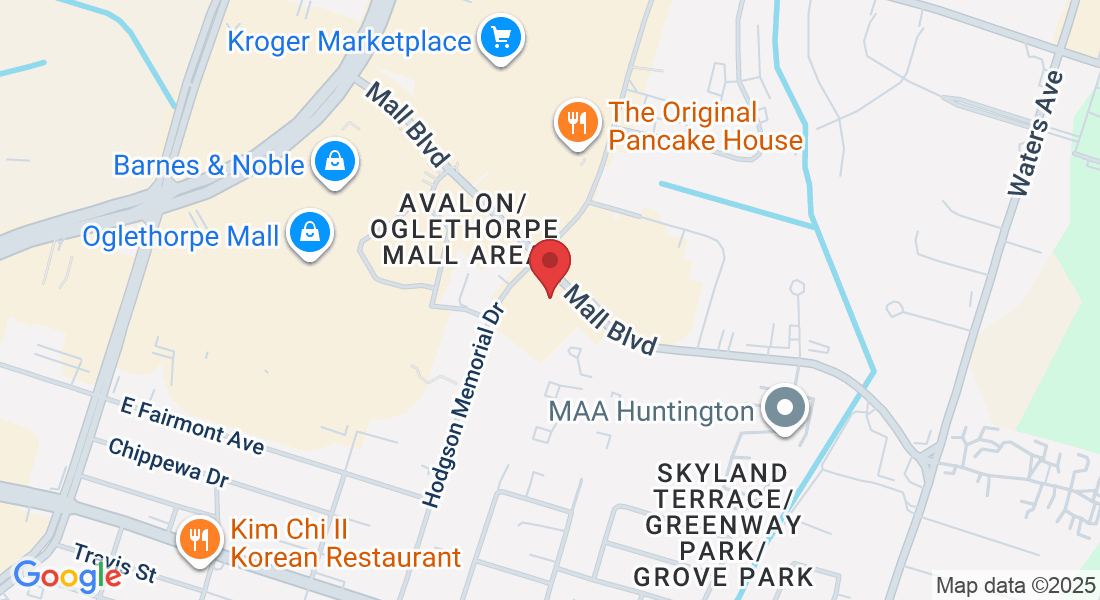
401 Mall Blvd Ste 101-d, Savannah GA 31406
Visit Us Mon-Fri 9:00am - 5:00pm

IOP vs. Outpatient Substance Abuse Services: A Comparison
September 28, 2025, by New Day Counseling
Choosing the right level of care is vital for lasting recovery from substance use disorder. This guide compares Intensive Outpatient Programs (IOP) and standard outpatient services, two distinct tiers offering unique intensity and flexibility, to help you determine the best path for your treatment needs.
Intensive Outpatient Program (IOP)
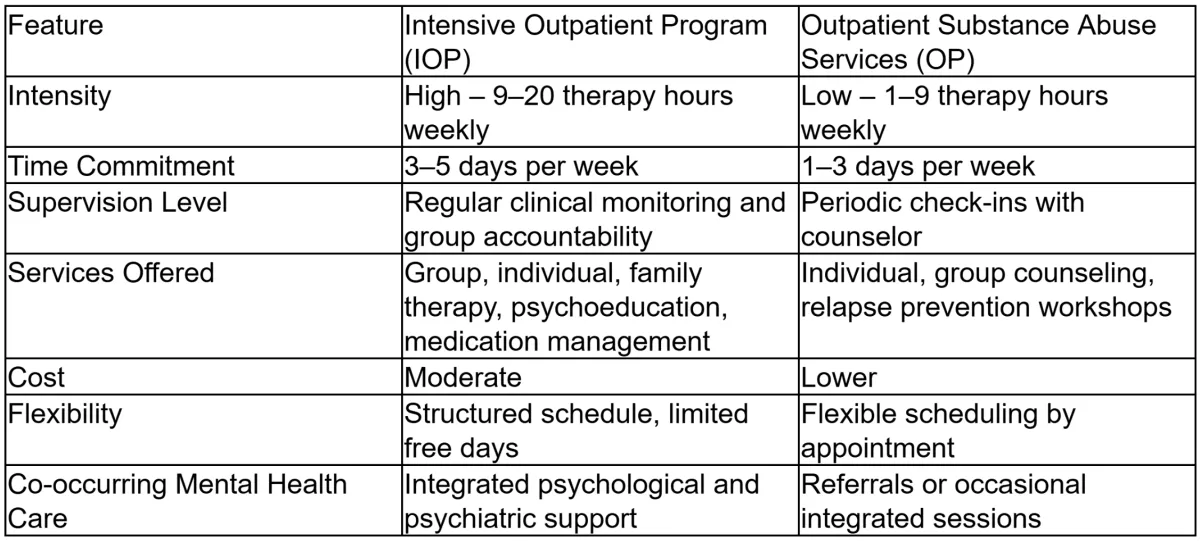
An IOP is a structured, part-time treatment model requiring 9 to 20 hours of therapy weekly, typically over 3 to 5 days. Participants live at home, balancing recovery with daily life. Services include group and individual therapy, family counseling, psychoeducation, and medication management. IOP suits those stepping down from inpatient care or needing robust support while maintaining work/family roles in a stable home environment.
Outpatient Substance Abuse Services
Outpatient services offer flexible, less intensive treatment, usually 1 to 9 hours of therapy weekly across 1–3 sessions. This allows individuals to integrate recovery into daily life with minimal disruption. Core services include individual and group therapy, relapse prevention, and case management. It's ideal for those with mild to moderate symptoms, stable home environments, or seeking aftercare with maximum scheduling flexibility.
Key Differences: IOP vs. Outpatient Services
The table below highlights the critical distinctions between IOP and outpatient services:
ASAM Levels of Care
The American Society of Addiction Medicine (ASAM) criteria define a continuum of care. Outpatient treatment is Level 1 (1–9 hours weekly), while IOP is Level 2.1 (9–20 hours weekly), positioned between standard outpatient and more intensive partial hospitalization or residential care. Understanding these levels ensures treatment intensity matches individual needs and supports appropriate transitions.
Benefits and Limitations
IOP offers structured support, skill application, peer community, and dual-diagnosis care, but with reduced flexibility and a need for strong self-motivation. Outpatient treatment provides maximum flexibility, lower cost, and community integration, though with limited intensity and higher self-responsibility. Weighing these factors is crucial for aligning treatment with personal priorities.
Choosing the Right Path
The choice depends on addiction severity, co-occurring disorders, home environment, work/school commitments, and financial resources. A professional assessment by a certified addiction specialist is critical to align the program with ASAM criteria and individual needs, optimizing the chance for sustained recovery. Cost and insurance coverage are also significant factors.
The Role of Relapse Prevention
Relapse prevention is fundamental to long-term recovery in both IOP and outpatient settings. Programs integrate strategies like cognitive-behavioral techniques, trigger mapping, and skills practice. Outpatient services also utilize individual relapse planning and community referrals. These tools equip individuals to manage high-risk situations, fostering sustainable habits for lasting sobriety.
Choosing between IOP and outpatient services requires careful consideration of individual needs, clinical severity, and life circumstances. By understanding their distinct structures, benefits, and the critical role of relapse prevention, individuals can work with counselors to select a treatment path that fosters lasting sobriety.
New Day Counseling can assist individuals with a multitude of needs in almost every aspect of the levels of care outlined by the American Society of Addiction Medicine, at an affordable cost!
CONTACTS
Find Us on a Map
PARENT COMPANY:
CREATIVE COUNSELLING SOLUTIONS LLC.
We Work for You Mon-Fri
from 9:00 AM to 5:00 PM
QUICK LINKS


© 2025 NEW DAY COUNSELING. All Rights Reserved.