Visit Us Mon-Fri from 9:00 AM to 5:00 PM
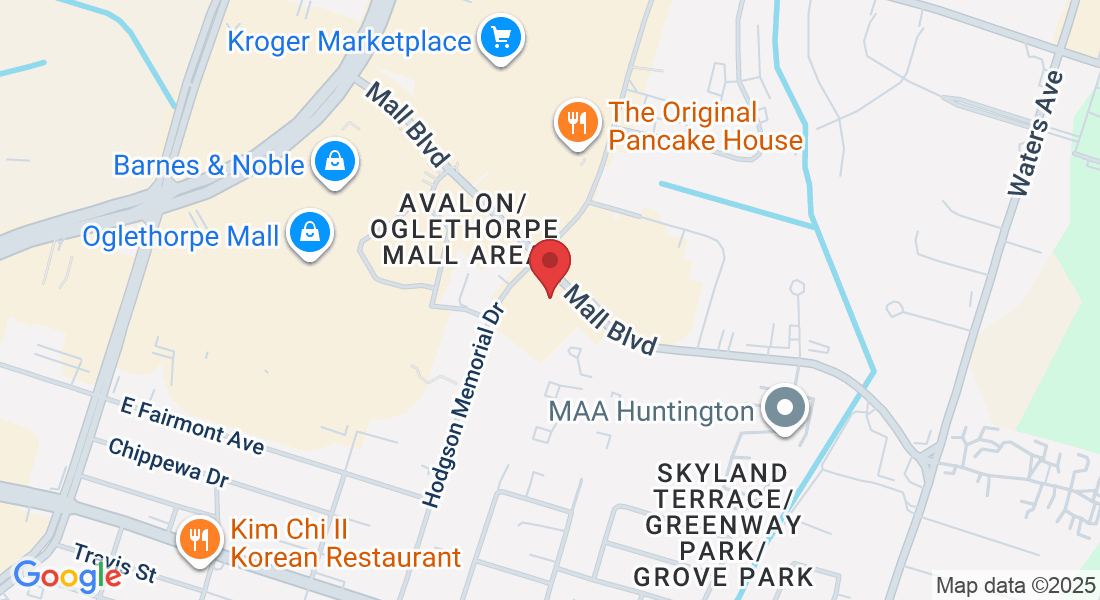
401 Mall Blvd Ste 101-d, Savannah GA 31406
Visit Us Mon-Fri 9:00am - 5:00pm

How to Prevent Relapse During the Holidays: Essential Holiday Relapse Prevention Tips for Staying Sober
November 30, 2025, by New Day Counseling
The holiday season significantly increases relapse risk due to stress, disrupted routines, and increased exposure to alcohol or drug cues. This guide provides a practical holiday relapse prevention plan, offering actionable strategies for managing triggers, strengthening support, and prioritizing self-care. You will learn to recognize triggers, build a reliable support system, and create exit strategies for high-risk situations, integrating evidence-informed tactics for a concrete routine during Christmas, New Year’s Eve, and other holidays.
What Are the Most Common Holiday Addiction Triggers and How Can I Identify Them?
Holiday-related triggers are emotional, social, or environmental cues that increase vulnerability to substance use. Identifying them involves noticing internal states (loneliness, stress) and external cues (open bars, travel) that have historically preceded cravings, allowing for targeted coping strategies.
Common holiday triggers and 1-line identification tips:
- Loneliness or social isolation: Notice when you’re avoiding gatherings or spending long periods alone and feeling empty.
- Stress and overwhelm: Check for racing thoughts, sleeplessness, or irritability when holiday tasks pile up.
- Grief and unresolved trauma: Flag anniversaries or memories that intensify sadness or yearning for old coping mechanisms.
- Alcohol availability and normalized drinking: Watch for environments where alcohol is central to celebration or where offers are frequent.
- Old social circles and enabling relationships: Identify people or places linked to past use that reappear at gatherings.
How Can I Build a Strong Support System to Maintain Sobriety During the Holidays?
A reliable support system combines peer accountability, professional care, and practical logistics, ensuring multiple paths to help when cravings or stress spike. This network includes a sponsor, therapist, and sober friends or family. Telehealth counseling and virtual 12-step meetings are especially valuable.
Practical steps to activate support:
- Schedule daily or event-specific check-ins: Arrange brief calls or texts with a sponsor, therapist, or trusted friend.
- Confirm meeting availability: Use local meeting finders or online groups for holiday dates.
- Prepare a short outreach script: Have a message ready (e.g., “I’m feeling triggered—can we talk?”) for simple help requests.
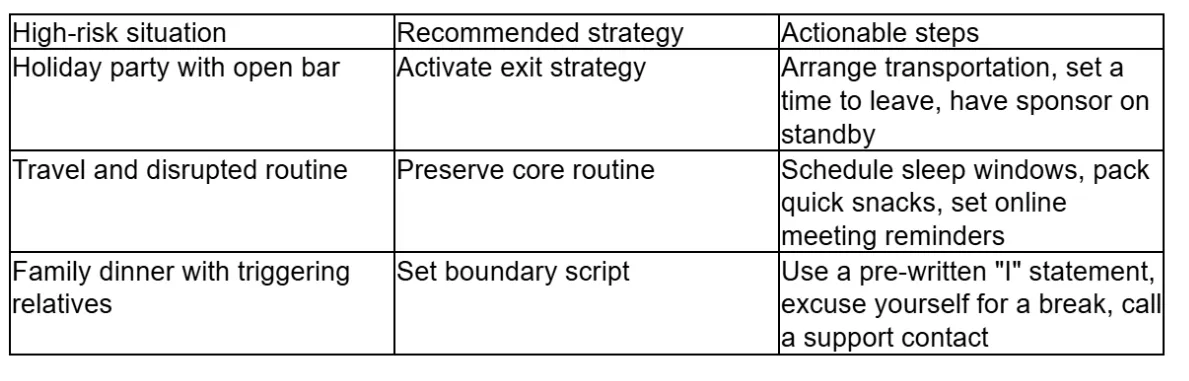
What Practical Coping Strategies Help Manage High-Risk Situations During Holiday Celebrations?
Practical coping strategies translate trigger recognition into concrete actions for high-risk moments. Core tactics include rehearsed exit strategies, refusal scripts, scheduled check-ins, distraction tools, and planning sober activities in advance.
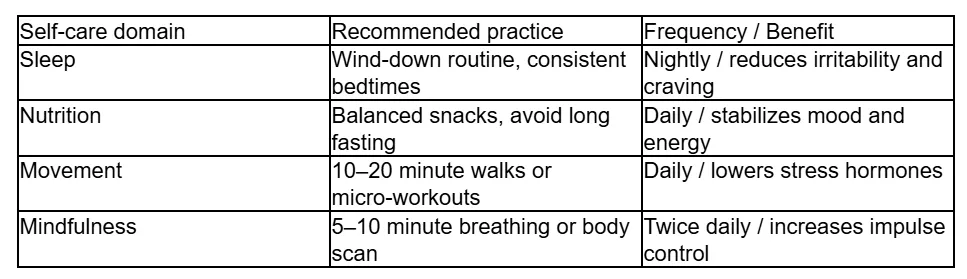
How Can Prioritizing Self-Care Strengthen My Recovery During the Holiday Season?
Self-care stabilizes emotional and physiological systems, reducing cravings. The HALT principle (Hungry, Angry, Lonely, Tired) is a practical diagnostic for immediate vulnerabilities. Mindfulness, meditations, and physical activity interrupt rumination and reduce reactive behavior.
When Should I Seek Professional Help to Strengthen My Holiday Recovery?
Seek professional help when warning signs indicate escalating risk, such as intense cravings, worsening sleep, increasing isolation, or thoughts of self-harm. Contact a licensed therapist, arrange an expedited outpatient session, or use crisis resources if safety is at risk, especially if co-occurring mental health issues worsen.
New Day Counseling can assist individuals with a multitude of needs in almost every aspect of the levels of care outlined by the American Society of Addiction Medicine, at an affordable cost!
CONTACTS
Find Us on a Map
PARENT COMPANY:
CREATIVE COUNSELLING SOLUTIONS LLC.
We Work for You Mon-Fri
from 9:00 AM to 5:00 PM
QUICK LINKS


© 2025 NEW DAY COUNSELING. All Rights Reserved.